

Fiona Yassin

Fiona - The Wave Clinic

Fiona Yassin, MSEd

International Program Director at The Wave

  • Expertise Psychology, Child Psychology, Personality, Research, Trauma, Eating Disorders

Highlights

  • Registered Psychotherapist and Accredited Clinical Supervisor in both the U.K. and UNCG.
  • Member of the International Chapter of IAEDP, with training in CBTe (Oxford Group), FREED (King’s College, London), TF-CBT, RO-DBT, and GPM.
  • Member of The Australia and New Zealand Eating Disorders Association.

Experience

Fiona Yassin is the International Program Director at The Wave, holding multiple credentials including being a registered Psychotherapist and Accredited Clinical Supervisor in both the U.K. and UNCG (Registration number #361609 National and International Council of Psychotherapists). She is EMDR trained (EMDRIA) and practices as a Trauma therapist (Registration number #10000054651).

Fiona’s expertise includes being a member of the International Chapter of IAEDP, with training in CBTe (Oxford Group), FREED (King’s College, London), TF-CBT, RO-DBT, and GPM. Her specializations cover the treatment of Eating Disorders and Borderline Personality Disorder, as well as families in High Conflict Divorces and Psychiatry across the female lifespan.

Additionally, Fiona holds the distinction of being a Fellow of APPCH, a senior accredited Addiction Professional, and a member of The Association of Child Protection Professionals. She is also trained in MBT (Child and Family and Adult) and Reflective Parenting with The Anna Freud Centre for Children and Families, and is a Member of The Australia and New Zealand Eating Disorders Association.

Fiona holds an MSc in Neuroscience and Mental Health awarded by King’s College London, where she received The Dean’s Award. She is currently completing an MSc in Psychiatry at Cardiff University Medical School and is a PhD Candidate in Mental Health Research at Lancaster University. Outside of her professional pursuits, she enjoys spending time with her three cats, going for long walks on the beach, and appreciating the beautiful animals in her garden.

More from Fiona Yassin

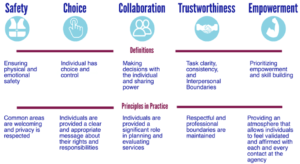
What is Trauma Informed Care and why do we need it?

What does trauma-informed care look like? When do we need to use trauma informed care?
The very first thing we need to have awareness of is just how common trauma is, and to recognise that almost every person who seeks treatment could have experienced at least one traumatic event in their life. We don’t always need to probe people about these experiences; instead, we need to assume that they may have this history and act accordingly. Trauma Informed Care (TIC) is appropriate for all our clients, regardless whether they disclose a trauma history or not. Care that is trauma informed involves prevention, recognition, and response to trauma-related difficulties. Experts agree that incorporating an awareness of trauma into medical care requires a systems-wide approach.


Read More »
Understanding Dyspraxia.

Understanding Dyspraxia

  I’m not clumsy. I am not stupid and I hate having toothpaste on my shirt. Understanding Dyspraxia – A parent and teen’s guide ‘Everyone

Read More »

The long-term physical and mental effects of drug abuse

Drugs come in many forms; illegal, prescription and even over the counter medications that, if abused, can lead to a serious dependency. From street drugs, such as heroin, cocaine, fentanyl and methamphetamine to prescribed medications, like Oxycodone and Vicodin and even those bought from a pharmacy, for example, codeine; all alter the chemistry of the brain and create a need, both mentally and physically to continue feeding the addiction.

Read More »

The long-term physical and mental effects of alcohol abuse

Alcohol is the most readily available drug to society, and as such has long been used and abused. If it were to be invented today the likelihood is that it would be banned and criminalized. According to Professor David Nutt, an English neuropsychopharmacologist specializing in the research of drugs that affect the brain and conditions such as addiction, ‘alcohol is more harmful than heroin or crack when the overall dangers to the individual and society are considered’.

Read More »

Insomnia and Depression

‘Insomnia’ is a word that we use and hear often. How much do we truly understand about insomnia and the links to depression? What can we do to help?
Insomnia comes from the Latin ‘in’ (no) and ‘somnus’ (sleep).
Insomnia is a pattern of severely reduced sleep or no sleep. It is a subjective diagnosis based upon being dissatisfied with the amount of sleep that we are getting.

Read More »

Drinking and Dependency – The Slippery Slope

Dependency on alcohol can sneak up on you without ever having realised there was a problem. A habit that is hard to break, it becomes all-consuming.

A few harmless drinks or a few too many?

Rewarding yourself with a few drinks at the end of a hard day has become somewhat of a norm. Whether in a social situation or even once home alone, the draw to have a drink or few in order to relax and unwind can quickly become a habit that creates a false sense of security and an ultimate escape from reality.

Read More »

Hitting Out Against Intimate Partner Violence

Intimate Partner  Violence (IPV) is on the rise. In fact, over 50% of women will experience relationship violence at some point in their life. Violence against male partners is increasing too; with reporting steadily increasing across the globe.

Read More »

Body Dysmorphic Disorder

The jokes and quips like, ‘does my bum look big in this?’ and the length of time it takes to get ready for a night out are often rooted in light-hearted fun. However, for approximately 3% of people, how they feel about their looks, body and image can have severe implications on life, home, work and relationships.

Read More »

Do violent games cause aggression in teenagers?

Gaming, racing, and high risk on screen behaviors could be adversely affecting your teenagers behavior in real world situations.

In studies examining the influence of violent and risk taking game play in young people aged 9 to 19; Researchers from the department of psychological and brain sciences at Dartmouth College have found that playing such games significantly increases aggressive and unpleasant behaviors in the real world.

Read More »

Mental Health Relapse – Navigating the not so good times

Sometimes, during times of stress or change, symptoms can prove challenging once again. These times are often referred to as ‘relapses’. Sometimes relapse will require hospital admission or an inpatient stay in a residential facility similar to The Wave. Sometimes the consequences of a relapse or worsening of symptoms can have more serious consequences. Without inpatient support symptoms can escalate requiring a crisis intervention.

Read More »
Young diverse friends walking on the street

Prepubescent Anorexia – Why Diagnosis in Under 14s is Rising

Identifying and treating anorexia as soon as possible is crucial to effective treatment and recovery. Without timely treatment, children can experience serious and long-term harm to their mental and physical health. This means that it’s really important to look out for the signs of anorexia in pre-teens as well as adolescents and seek professional support if there are any concerns.

Read More »
young male teenager sitting outdoors, faraway look symbolizing loneliness, depression, angst

Loneliness and Eating Disorders: Exploring the Connection

Social isolation and loneliness may cause young people to become more inward-focused and preoccupied with their body shape and weight. Meaningful social relationships are important in creating a sense of perspective and self-worth. Relationships help young people understand the many ways they are valuable and emphasise their hobbies and passions. Without these relationships, it’s easier for disordered eating attitudes and behaviours to dominate a young person’s life.

Read More »

Professional associations and memberships

We are here to help

Have any questions or want to get started with the admissions process? Fill in the form below and we’ll get back to you as soon as possible.

    Wave-Logo_square

    Kuala Lumpur, Malaysia

    Dubai, United Arab Emirates

    London, United Kingdom